Strategic Analysis Report
The Endless Frontiers Institute
Comprehensive Investigation & One-Year Status Assessment
1. Executive Summary
Key Finding
The Endless Frontiers Institute (EFI), launched in April 2025 at a major retreat in Austin, Texas, represents the most ambitious attempt in a generation to institutionalize coordination between the U.S. government, technology industry, venture capital, and academia for the purpose of maintaining American technological supremacy—particularly in competition with China. One year on, the initiative has demonstrated measurable momentum: its second annual retreat is scheduled for April 21–23, 2026, key partner organizations have scaled dramatically, and the defense technology venture ecosystem it seeks to catalyze saw record investment of $49.1 billion in 2025.
On April 14–16, 2025, approximately 200 leaders from government, technology, defense, academia, and venture capital convened in Austin, Texas, for the inaugural Endless Frontiers retreat. The gathering—co-hosted by America’s Frontier Fund (AFF), the Council on Foreign Relations (CFR), Baylor University, Rice University, Texas A&M University, and the University of Texas at Austin—marked the formal launch of the Endless Frontiers Institute, a new entity designed to sustain multi-sector collaboration over a ten-year horizon.
The retreat featured the first technology policy speech of the Trump administration, delivered by White House OSTP Director Michael Kratsios, who outlined a “promote and protect” strategy for American technological leadership. The event produced five priority areas for national renewal and announced the creation of the Inman Prize for American Innovation.
This report provides a comprehensive analysis of the initiative’s origins, organizational structure, key participants, strategic objectives, and—critically—a one-year status assessment examining what has changed between April 2025 and April 2026.
Scope of Analysis
| Dimension | Coverage |
|---|---|
| Temporal Range | April 2025 launch through April 2026 status |
| Organizations Analyzed | America’s Frontier Fund, Council on Foreign Relations, 8VC, Overmatch Ventures, Baylor University, White House OSTP |
| Sectors Covered | Government policy, defense technology, venture capital, academic research |
| Geographic Focus | Austin/Central Texas hub; national implications |
| Primary Sources | White House OSTP remarks, CFR analysis, PitchBook data, press reporting, organizational filings |
2. Background & Context
2.1 Historical Inspiration
The initiative draws its name from Vannevar Bush’s 1945 report Science—The Endless Frontier, which argued that sustained federal investment in scientific research was essential to national prosperity and security. That report led to the creation of the National Science Foundation and established the intellectual framework for America’s postwar technological dominance.
The Endless Frontiers Institute explicitly positions itself as a 21st-century heir to Bush’s vision, arguing that the current geopolitical environment—particularly strategic competition with China—demands a comparable national mobilization of talent, capital, and institutional coordination.
2.2 Motivating Factors
Geopolitical Competition
- China’s trillion-dollar investment in AI, quantum computing, and semiconductors
- Erosion of U.S. advantages in critical mineral supply chains
- Rising military-technological capabilities of near-peer adversaries
- The “decisive decade” framing adopted by successive administrations
Domestic Structural Gaps
- Fragmentation between government, industry, and academic research
- Venture capital historically averse to deep-tech and defense sectors
- Slow government procurement unable to match pace of innovation
- Talent pipeline misalignment between universities and national priorities
2.3 The Austin Retreat (April 14–16, 2025)
The retreat was deliberately located in Austin, Texas—outside the traditional power centers of Washington, D.C., and Silicon Valley—to signal a broader geographic inclusion and to leverage Central Texas’s growing ecosystem of defense-focused technology firms and major research universities.
Approximately 200 participants were organized into 20 working groups over three days. The event was structured to prioritize intimate, interactive discussion over keynote-style presentations. Participants included current and former White House officials, members of Congress, former defense secretaries and CIA directors, NASA administrators, university presidents, venture capitalists, technology founders, and scientists.
2.4 White House OSTP Address
Michael Kratsios, Director of the White House Office of Science and Technology Policy · April 14, 2025
“Our technologies permit us to manipulate time and space. They leave distance annihilated, cause things to grow, and improve productivity.”
Kratsios’s speech—the Trump administration’s first major technology policy address—outlined a “promote and protect” framework built on three pillars: leading in AI innovation through deregulation and targeted R&D investment; building robust energy and data center infrastructure; and promoting global adoption of American technology as the default international standard.
2.5 Five Priority Areas Identified
| # | Priority | Description |
|---|---|---|
| 1 | Rebuild the Arsenal of Democracy | Enhance U.S. military technological capabilities through advanced manufacturing, AI, and autonomous systems |
| 2 | Restore Industrial Capacity | Strengthen domestic manufacturing base, particularly in semiconductors, advanced materials, and energy systems |
| 3 | Secure Critical Infrastructure | Reduce supply chain dependencies and protect vital systems from cyber and physical threats |
| 4 | Renew Government | Modernize procurement, regulatory frameworks, and talent pipelines for 21st-century challenges |
| 5 | Foster National Unity | Build shared purpose across sectors and political affiliations to sustain long-term commitment |
3. Key Attendees & Organizational Mapping
The inaugural retreat brought together approximately 200 participants, carefully curated to represent the full spectrum of stakeholders required for the initiative’s multi-sector approach. The following analysis maps key individuals by sector, organizational affiliation, and their roles within the Endless Frontiers ecosystem.
3.1 Government & Policy Leaders
| Individual | Position / Affiliation | Relevance to EFI |
|---|---|---|
| Michael Kratsios | Director, White House OSTP | Delivered keynote; architect of “promote and protect” strategy |
| Robert Gates | Former Secretary of Defense | Bipartisan credibility; defense establishment engagement |
| William McRaven | Retired Admiral; UT Austin Chancellor Emeritus | Military-academic bridge; Texas institutional connections |
| Members of Congress | Bipartisan delegation (names restricted) | Legislative pathway for policy recommendations |
| Former CIA Directors | Multiple attendees | Intelligence community perspective on technology competition |
| Former NASA Administrators | Multiple attendees | Space technology and government R&D management expertise |
3.2 Technology & Industry Leaders
| Individual | Position / Affiliation | Relevance to EFI |
|---|---|---|
| Gilman Louie | CEO, America’s Frontier Fund | Co-founder of EFI; primary operational driver |
| Jordan Blashek | President, AFF; GP, Overmatch Ventures | Key bridge between AFF and Overmatch; co-founder of EFI |
| Joe Lonsdale | Co-Founder, 8VC; Co-Founder, Palantir | Defense tech ecosystem influence; venture capital deployment |
| Jake Medwell | Partner, 8VC | Former White House senior advisor; government-VC nexus |
| Evan Loomis | Founder, Overmatch Ventures | Defense/space VC; co-sponsored the retreat |
| Eric Schmidt | Former Google CEO; AFF Foundation backer | Strategic funder; technology industry credibility |
| Peter Thiel | Founders Fund; AFF Foundation investor | Strategic funder; defense-tech ecosystem architect |
3.3 Academic Leaders
| Institution | Role | Contribution |
|---|---|---|
| Baylor University | Founding Sponsor & Host | $1.7M grant; EFI initially housed at Baylor; Waco office |
| University of Texas at Austin | Co-hosting University | Research partnerships; talent pipeline in engineering and CS |
| Rice University | Co-hosting University | Energy and materials science research alignment |
| Texas A&M University | Co-hosting University | Defense research capabilities; engineering talent |
3.4 Organizational Interconnection Map
The relationships between key participants reveal a tightly interconnected network. The following diagram illustrates the primary relationships and organizational overlaps:
Figure 3.1 — Key Organizational Relationships
Policy framework: “Promote & Protect”
▼
America’s Frontier Fund
Louie · Blashek
Operational backbone & funding
Council on Foreign Relations
Froman · Doshi
Strategic policy & China analysis
Texas University Consortium
Baylor · UT · Rice · A&M
Research & talent pipeline
▼ Ecosystem Partners & Sponsors ▼
8VC
Lonsdale · Medwell
$6B+ AUM · Defense tech VC
Overmatch Ventures
Loomis · Blashek · Hitzig
$500M+ platform · Deep tech/defense
Schmidt · Thiel
Strategic funders
AFF Foundation backers
Critical connection: Jordan Blashek serves as both President/COO of America’s Frontier Fund and General Partner at Overmatch Ventures, making him the single most important bridge between EFI’s operational core and the defense-focused venture capital ecosystem.
4. Organizational Structure & Governance
4.1 Entity Overview
The Endless Frontiers Institute is registered as a nonprofit organization (EIN: 39-3699126) in Austin, Texas, with a ruling year of 2025. It operates with offices in both Austin and Waco, Texas, and is initially housed at Baylor University. The institute was created as an outcome of the inaugural retreat to provide year-round institutional continuity.
4.2 Organizational Hierarchy
| Tier | Entities | Function |
|---|---|---|
| Strategic Leadership | White House OSTP, Senior Congressional delegation | Policy direction, regulatory framework, funding authorization |
| Core Operations | America’s Frontier Fund, Endless Frontiers Institute | Day-to-day management, retreat organization, partnership facilitation, catalytic investment |
| Strategic Analysis | Council on Foreign Relations (China Strategy Initiative) | Geopolitical assessment, policy recommendations, public intellectual framework |
| Academic Partners | Baylor, UT Austin, Rice, Texas A&M | Research, talent development, institutional housing, regional anchoring |
| Capital Partners | 8VC, Overmatch Ventures, Founders Fund, Schmidt Futures | Venture capital deployment, startup ecosystem development, deal flow |
4.3 Funding Architecture
Institutional Funding
- Baylor University: $1.7 million founding grant
- AFF Foundation: Backed by Eric Schmidt and Peter Thiel
- Federal programs: SBICCT (DoD/SBA) providing government loans
Venture Capital Ecosystem
- AFF Frontier Fund: Target $315M ($140M private + $175M government)
- Overmatch Ventures: $500M+ total platform (Fund I + Fund II)
- 8VC: $6B+ assets under management across multiple funds
4.4 Geographic Strategy
The deliberate choice of Central Texas as EFI’s base reflects several strategic calculations: proximity to major military installations (Fort Cavazos, Joint Base San Antonio), a growing defense-tech startup ecosystem, four Tier 1 research universities, lower cost of operations than coastal cities, and political positioning in a state with significant bipartisan support for defense spending and technology investment.
5. Vision, Mission & Strategic Framework
5.1 Vision Statement
To reignite the engines of American innovation and strength by fostering unprecedented collaboration between government, industry, academia, and capital—ensuring the United States maintains global technological leadership through the decisive decade and beyond.
5.2 Mission
The Endless Frontiers Institute facilitates sustained investment in people, ideas, and partnerships to rebuild American strength. It commits to convening annually, incubating actionable policy recommendations, accelerating talent transitions between sectors, and deploying catalytic capital into frontier technologies critical to national security.
5.3 Dual Strategy: Promote & Protect
The strategic framework, articulated by OSTP Director Kratsios at the retreat, operates on two complementary tracks:
Promote
Accelerate American innovation through:
- Smart allocation of $150–170B annual federal R&D budget
- Pro-innovation regulatory regime (deregulation of AI, biotech)
- Energy and data center infrastructure buildout
- Government adoption and procurement modernization
- Global promotion of American technology as default standard
- Open-source model incentivization and dataset accessibility
Protect
Safeguard American advantages through:
- Simple, strict export controls on frontier technologies
- Cybersecurity hardening of critical infrastructure
- Supply chain diversification away from adversarial dependencies
- Intellectual property protection enforcement
- Counter-intelligence measures in research institutions
- Allied technology-sharing frameworks (Quad Investor Network)
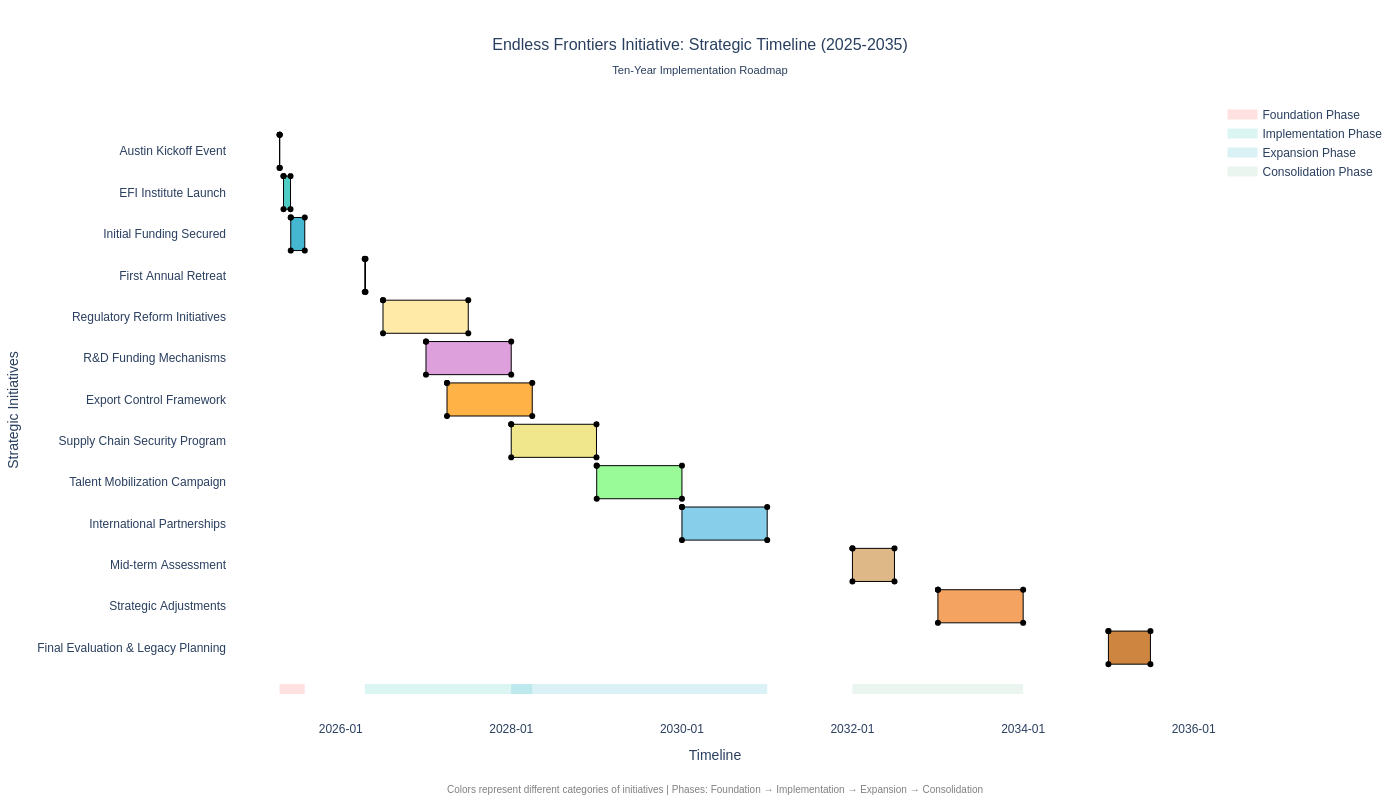
5.4 Ten-Year Implementation Timeline
| Phase | Period | Objectives |
|---|---|---|
| Foundation | 2025–2026 | Launch EFI, establish annual retreat cadence, secure founding partners and funding, inaugural Inman Prize, initial policy recommendations |
| Implementation | 2027–2028 | Scale investment platform, deepen university research partnerships, expand working group outputs into legislative proposals, grow defense-tech deal pipeline |
| Expansion | 2029–2031 | International alliance building (Quad Investor Network expansion), mid-decade progress assessment, second-generation talent pipeline maturation |
| Consolidation | 2032–2035 | Sustained institutional self-sufficiency, measurable technology leadership metrics, legacy infrastructure for ongoing national coordination |
5.5 Technology Focus Areas
Artificial Intelligence
Active investment
Quantum Computing
Early-stage R&D
Advanced Semiconductors
CHIPS Act alignment
Autonomous Systems
Rapid scaling
Synthetic Biology
Emerging priority
Nuclear Energy
Infrastructure focus
Hypersonics
AFF portfolio (Venus Aerospace)
Space Technology
Overmatch focus
Advanced Materials
AFF portfolio (Foundation Alloy)
Cybersecurity
EFI expansion area
Critical Minerals
Supply chain priority
Robotics
Defense manufacturing
6. Organizational Deep Dive
This section provides an in-depth assessment of four organizations central to the Endless Frontiers ecosystem: their structure, motivations, roles, and predicted impact.
6.1 America’s Frontier Fund (AFF)
| Type | 501(c)(3) nonprofit venture capital fund |
| Founded | 2021 |
| Headquarters | Washington, D.C. / Austin, TX |
| Leadership | Gilman Louie (CEO), Jordan Blashek (President/COO) |
| Financials (2023) | Revenue: $7.66M; Expenses: $7.14M |
| Fund Target | $315M ($140M private + $175M government SBICCT loans) |
| Strategic Backers | Eric Schmidt, Peter Thiel, State of New Mexico ($100M) |
Importance Rating
Critical
Primary founding organization and operational backbone of EFI
Motivation: AFF was created to address a fundamental market failure—the reluctance of traditional venture capital to invest in capital-intensive, long-cycle technologies critical to national security. As Jordan Blashek has stated: “Nations like China are investing trillions in a top-down attempt to surpass the United States. If they take the lead in technologies like AI, quantum computing, or advanced energy, it will threaten not only our future global competitiveness, but also the security and collective prosperity of democracies worldwide.”
Role in EFI: AFF serves as the founding organization, operational manager, and financial backbone. It launched EFI as a direct outcome of the 2025 retreat, provides year-round institutional continuity through incubation of ideas and talent pipelines, and deploys catalytic funding into portfolio companies (Venus Aerospace, Foundation Alloy, Revalia Bio, Antheia).
Predicted Impact: As the single most important entity in the EFI ecosystem, AFF’s success or failure will largely determine whether the initiative achieves its ten-year objectives. Its unique position at the intersection of nonprofit mission and venture capital deployment gives it unusual flexibility.
6.2 Council on Foreign Relations (CFR)
| Type | Nonpartisan think tank and policy institute |
| Founded | 1921 |
| Headquarters | New York, NY / Washington, D.C. |
| Leadership | Michael Froman (President), Rush Doshi (China Strategy Director) |
| Annual Budget | $75M+ |
| EFI Role | Co-host via China Strategy Initiative (launched June 2024) |
Importance Rating
High
Strategic policy guidance and geopolitical analysis
Motivation: CFR’s China Strategy Initiative, launched in June 2024 under Rush Doshi (former White House NSC Director for China), provides the intellectual and analytical foundation for understanding the competitive landscape. The initiative is structured around four questions: What does China think? What does China do? How should the U.S. compete? How should we manage competition?
Role in EFI: CFR co-hosted the inaugural retreat and provides strategic policy guidance, geopolitical analysis, and convening power among foreign policy professionals. Its China Policy Accelerator produces actionable recommendations on defense industrial base, critical infrastructure, and industrial policy.
Predicted Impact: CFR provides the intellectual legitimacy and bipartisan credibility that EFI needs to influence policy. Its extensive network of government officials, foreign policy experts, and media relationships amplifies EFI’s reach well beyond the technology and venture capital communities.
6.3 8VC
| Type | Venture capital firm |
| Founded | 2015 by Joe Lonsdale |
| Headquarters | Austin, TX / San Francisco, CA |
| AUM | $6B+ across multiple funds |
| 2025 Activity | 55 investments; defense-tech focus accelerating |
| 2026 YTD | 20 investments including Saronic Series D follow-on |
Importance Rating
Moderate
Ecosystem player with complementary investment focus
Motivation: 8VC operates in sectors closely aligned with EFI’s priorities, particularly defense technology, government software, and autonomous systems. Joe Lonsdale’s background as Palantir co-founder and Jake Medwell’s former White House role position the firm at the government-technology nexus.
Key Portfolio Companies: Shield AI (autonomous systems, $200M Series E), Vannevar Labs (defense AI, $75M Series B), Saronic ($600M round at $4B valuation in 2026), Epirus (counter-drone systems, co-founded through 8VC Build program), Rebellion Defense ($150M Series C).
Predicted Impact: 8VC’s role is primarily as a capital deployer and ecosystem connector. Its November 2025 strategic partnership with Israel’s Kinetica Venture Capital to advance Israeli defense startups in the American market adds an international dimension aligned with EFI’s allied technology-sharing goals.
6.4 Overmatch Ventures
| Type | Defense-focused venture capital firm |
| Founded | Austin, TX |
| Leadership | Evan Loomis, Jordan Blashek (GP), Morgan Hitzig (GP) |
| Fund I | $70M (debut) |
| Fund II | $250M (oversubscribed, announced March 2026) |
| Total Platform | $500M+ including co-investments and SPVs |
Importance Rating
High (Revised ↑)
Upgraded from Moderate based on Fund II and Blashek connection
Motivation: Overmatch invests exclusively in deep tech, defense, and space—precisely the sectors EFI prioritizes. The firm’s general partners include three military veterans who frame their investment thesis in national security terms. As stated in their Fund II announcement: “Securing the technological high ground is the defining race of our time—and winning it requires courageous founders, capital with conviction, and a willing government.”
Critical Connection: Jordan Blashek’s dual role as AFF President/COO and Overmatch GP creates the strongest organizational bridge in the EFI ecosystem. This personal link ensures alignment between EFI’s policy objectives and Overmatch’s investment deployment.
Key Portfolio: xAI, Saronic (autonomous vessels), CHAOS Industries ($275M Series C in 2025), Nominal, Impulse Space, Armada AI. Overmatch also connects founders with government stakeholders through initiatives like the “Demand Signal Forum” to accelerate technology deployment.
6.5 Comparative Assessment
| Organization | Primary Function | Capital Scale | EFI Role | Importance |
|---|---|---|---|---|
| America’s Frontier Fund | Nonprofit VC + Operations | $315M fund | Founder & backbone | Critical |
| Council on Foreign Relations | Policy & analysis | $75M budget | Co-host & strategy | High |
| Overmatch Ventures | Defense/space VC | $500M+ platform | Sponsor & deal flow | High |
| 8VC | Generalist VC (defense tilt) | $6B+ AUM | Sponsor & ecosystem | Moderate |
7. One-Year Status Update (April 2025 – April 2026)
Assessment Summary
One year after launch, the Endless Frontiers Institute has achieved its Foundation Phase objectives on schedule. The second annual retreat is confirmed, partner organizations have scaled significantly, and the broader defense technology ecosystem has experienced unprecedented growth. The initiative appears to have substantial institutional momentum and durable commitment from its core stakeholders.
7.1 Institutional Developments
| Milestone | Status | Details |
|---|---|---|
| Second Annual Retreat | Confirmed | April 21–23, 2026 at the Holdsworth Center, The Campus on Lake Austin. Private, invite-only. Expanded attendee categories now include athletes and foreign leaders. |
| EFI Nonprofit Registration | Complete | EIN: 39-3699126, registered in Austin, TX. Ruling year 2025. Offices operational in Austin and Waco. |
| Inman Prize for American Innovation | Pending | Inaugural winner expected to be announced at 2026 ceremony with Admiral McRaven and former SecDef Gates presenting. |
| Expanded Focus Areas | In Progress | EFI discussions have expanded to include cybersecurity and critical minerals, per the original roadmap. |
7.2 Partner Organization Progress
America’s Frontier Fund
AFF has made significant progress on its $315 million debut fund raise, combining $140 million in private capital with $175 million in government SBICCT loans. The fund has deployed capital into at least four companies during the period:
| Company | Date | Sector | Stage |
|---|---|---|---|
| Venus Aerospace | November 2024 | Hypersonic engines | Early-stage VC |
| Foundation Alloy | February 2025 | Advanced manufacturing | Seed |
| Revalia Bio | September 2025 | Healthcare discovery | VC round |
| Antheia | January 2026 | Biotechnology | Later-stage VC |
Gilman Louie continues to hold prominent positions including Chairman of the National Intelligence University, Chairman of the Federation of American Scientists, and member of the President’s Intelligence Advisory Board— ensuring AFF retains deep institutional access across the intelligence and policy communities.
Overmatch Ventures
Overmatch demonstrated the most dramatic growth among EFI ecosystem organizations. In March 2026, the firm announced an oversubscribed $250 million Fund II—a 3.6x increase from its $70 million debut fund. Including co-investments and SPVs, the total platform now exceeds $500 million.
Fund II targets approximately 25 core investments at Seed and Series A stages, with SPVs providing follow-on growth capital. Portfolio highlights from Fund I include investments in xAI, Saronic (autonomous vessels), CHAOS Industries ($275M Series C in 2025), Impulse Space, and Armada AI.
8VC
8VC maintained its aggressive pace with 55 investments in 2025 and 20 investments in the first quarter of 2026. Defense-adjacent investments include a Series D follow-on in Saronic (March 2026) and the November 2025 strategic partnership with Israel’s Kinetica Venture Capital to advance Israeli defense startups in the American market.
Council on Foreign Relations
CFR’s China Strategy Initiative has continued producing analyses directly relevant to EFI’s mission, including reports on leapfrogging China’s critical minerals dominance (February 2026), the new U.S. cyber strategy and China’s threat (January 2026), and tracking Chinese overseas industrial investments (March 2026). The Washington China Forum, a joint effort with UC San Diego, convened in 2026 to discuss trade, technology, and security policy.
7.3 Ecosystem Growth: Defense Tech Venture Capital
The broader ecosystem that EFI seeks to catalyze experienced record growth in 2025:
| Metric | 2024 | 2025 | Change |
|---|---|---|---|
| Global defense tech VC deals | $27.2B | $49.1B | +81% |
| U.S. defense tech equity funding | $5.0B | $14.2B | +184% |
| European defense tech funding | $1.8B | $2.48B | +38% |
| Active defense tech VC firms | — | — | +41% YoY |
| Manufacturing-focused defense investment | $2.6B (24 deals) | $4.7B (39 deals) | +81% |
Notable ecosystem milestones include Anduril raising $2.5 billion at a $30.5 billion valuation, Saronic reaching a $4 billion valuation after a $600 million round, and Helsing raising €600 million. The House of Representatives proposed $832 billion in discretionary defense funding for FY2026, including $148 billion for R&D.
7.4 Policy Environment Assessment
The policy environment has evolved favorably for EFI’s objectives:
- OSTP “Promote and Protect” strategy formalized: Kratsios’s AI Action Plan prioritizes deregulation, targeted R&D investment, infrastructure buildout, and global technology export promotion—all aligned with EFI’s stated objectives.
- Federal R&D priorities shifted: The 2026 budget request spared emerging technology research from broader cuts, while the NSF refocused priorities away from DEI toward technology competition.
- Export control tightening: “Simple and strict” controls on frontier AI models and semiconductor chips to adversarial nations.
- Energy infrastructure acceleration: Regulatory streamlining for data centers and power generation to support AI computation demands.
7.5 Risk Factors
| Risk | Severity | Assessment |
|---|---|---|
| Political transition vulnerability | High | EFI benefits from current administration alignment; policy continuity uncertain beyond 2028 |
| Concentration risk | Medium | Heavy dependence on AFF/Blashek as operational nexus; limited institutional redundancy |
| Market correction | Medium | Defense tech valuations may face correction if government procurement doesn’t scale to match VC expectations |
| Partisan capture perception | Low-Medium | Bipartisan framing is genuine (CFR involvement) but risk of perception as aligned with current administration |
8. Conclusions & Outlook
8.1 Overall Assessment
The Endless Frontiers Institute, one year after its launch, has achieved its Foundation Phase milestones and demonstrated institutional durability. The initiative benefits from several favorable structural conditions: strong alignment with current administration policy, record venture capital flows into defense technology, bipartisan support for technology competition with China, and a well-connected leadership team with deep roots in both government and industry.
The core AFF–CFR partnership provides both operational capability and strategic depth, while the Overmatch Ventures connection (through Jordan Blashek’s dual role) ensures direct linkage between policy objectives and capital deployment. The Texas university consortium anchors the initiative in a growing regional ecosystem with strong talent pipelines.
8.2 Key Judgments
EFI has achieved escape velocity as an institution.
Confidence: HighThe confirmed second retreat, expanding attendee base, and operational infrastructure suggest the initiative has moved beyond a one-time event into a durable institution. The 10-year commitment appears credible given the organizational investment.
The initiative is genuinely bipartisan in composition but politically aligned in timing.
Confidence: HighCFR involvement, bipartisan Congressional attendance, and the participation of officials from multiple administrations reflect genuine cross-party buy-in. However, the strong alignment with current OSTP policy creates both opportunity and vulnerability.
Jordan Blashek is the single most critical node in the network.
Confidence: HighHis simultaneous roles at AFF (President/COO) and Overmatch Ventures (GP), combined with his military background and Yale/Stanford credentials, make him the primary bridge between operational, capital, and defense communities. This is both a strength and a concentration risk.
The defense tech venture ecosystem is growing faster than EFI anticipated.
Confidence: Medium-HighThe 81% increase in global defense tech VC deals ($49.1B in 2025) and 184% increase in U.S. equity funding suggest that market forces are amplifying EFI's coordination efforts. The initiative is riding a structural wave, not creating one.
The initiative's greatest challenge lies in the Implementation Phase (2027–2028).
Confidence: MediumConverting retreat discussions and policy recommendations into legislative action and institutional change will require sustained engagement beyond annual events. The expansion of topics (cybersecurity, critical minerals) needs to be balanced against depth of impact.
8.3 Indicators to Watch (2026–2027)
| Indicator | Significance | Expected Timeline |
|---|---|---|
| Inman Prize inaugural award | Demonstrates institutional maturity and convening power | 2026 ceremony |
| AFF fund close | Validates the nonprofit VC model at scale | 2026 |
| Legislative outcomes from working groups | Measures policy impact beyond convening | 2026–2027 |
| Third annual retreat attendance | Tests sustained engagement and institutional momentum | April 2027 |
| Portfolio company government contracts | Validates the lab-to-procurement pipeline | Ongoing |
| Administration transition planning | Tests bipartisan durability of the initiative | 2028 |
8.4 Final Assessment
The Endless Frontiers Institute represents a serious, well-resourced, and strategically positioned attempt to institutionalize the coordination between American government, industry, academia, and capital that the current geopolitical moment demands. Its first year has been successful by any reasonable measure: the institution exists, is funded, has achieved operational continuity, and operates within a rapidly growing ecosystem. The critical test will come in the Implementation Phase (2027–2028), when the initiative must convert convening power into measurable policy and investment outcomes—and demonstrate that its bipartisan structure can survive changes in political leadership.
9. Visual Appendix
The following visualizations were produced as part of this analysis to illustrate the organizational structure, leadership networks, strategic framework, and geopolitical context of the Endless Frontiers Initiative. Click any figure to expand.
Figure A.1 — Organizational Mind Map
Comprehensive visualization of organizational interconnections across six sectors: Government & Policy, Technology & Industry, Venture Capital, Academic Institutions, Think Tanks, and Strategic Focus Areas.
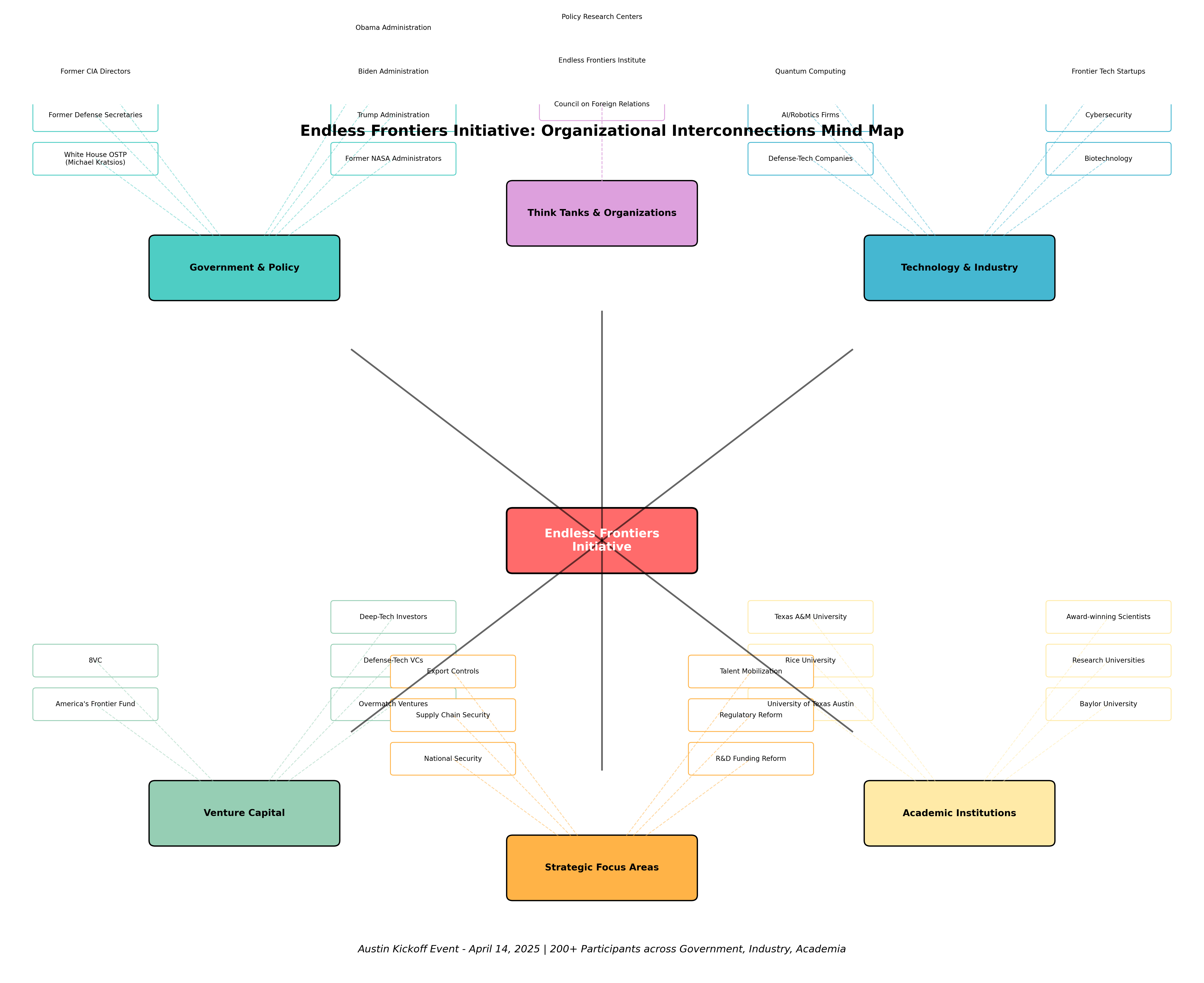
Figure A.2 — Leadership Network Diagram
Network analysis of relationships between key leaders, color-coded by sector. Node sizes represent relative influence within the EFI ecosystem.
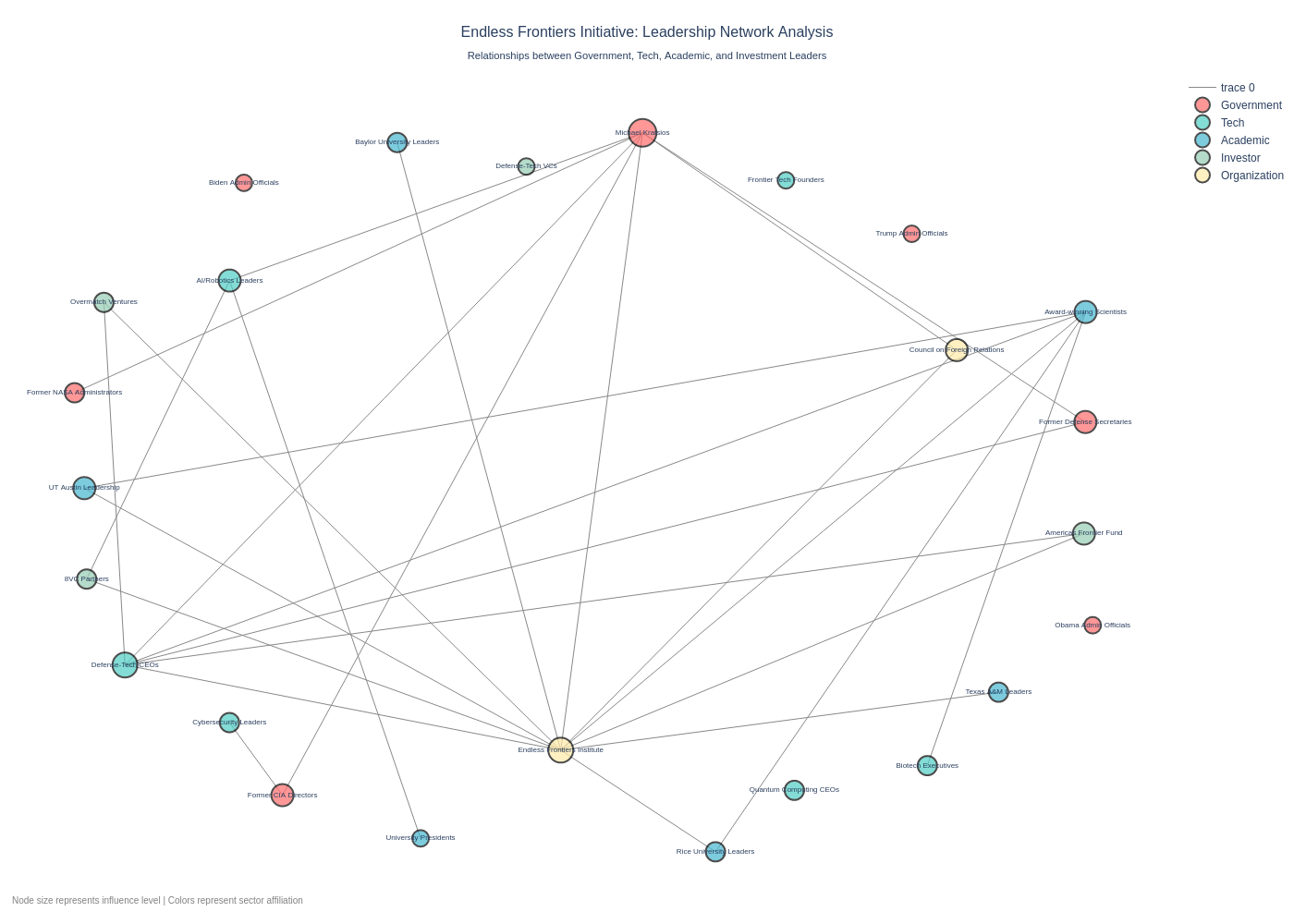
Figure A.3 — Organizational Hierarchy
Six-tier hierarchical structure from strategic leadership (White House OSTP) through operational management, academic partnerships, and strategic focus areas.
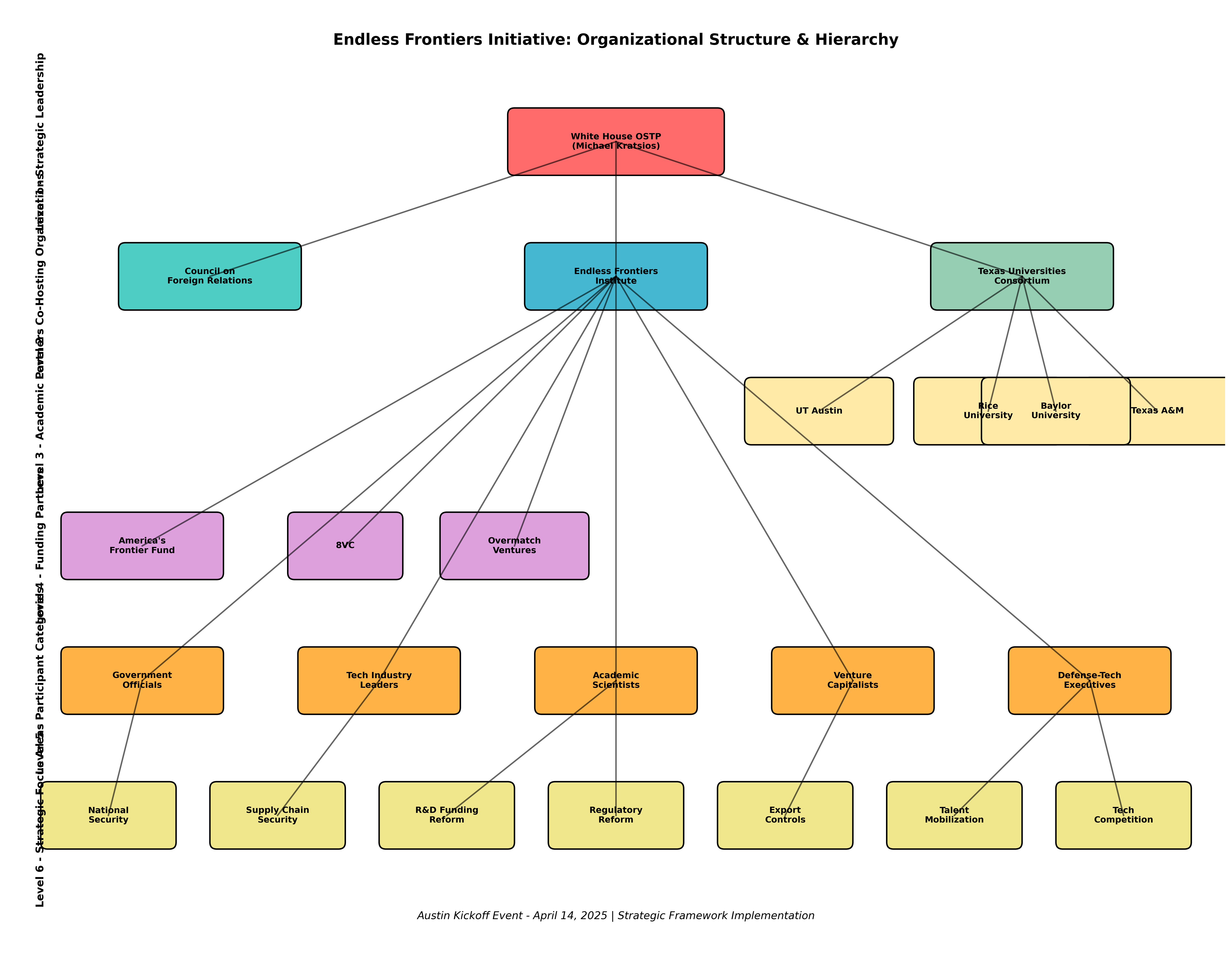
Figure A.4 — Strategic Framework
Complete strategic framework visualization from Vision through Mission, dual-pronged Promote & Protect strategy, five key objectives, six implementation methods, and success metrics.
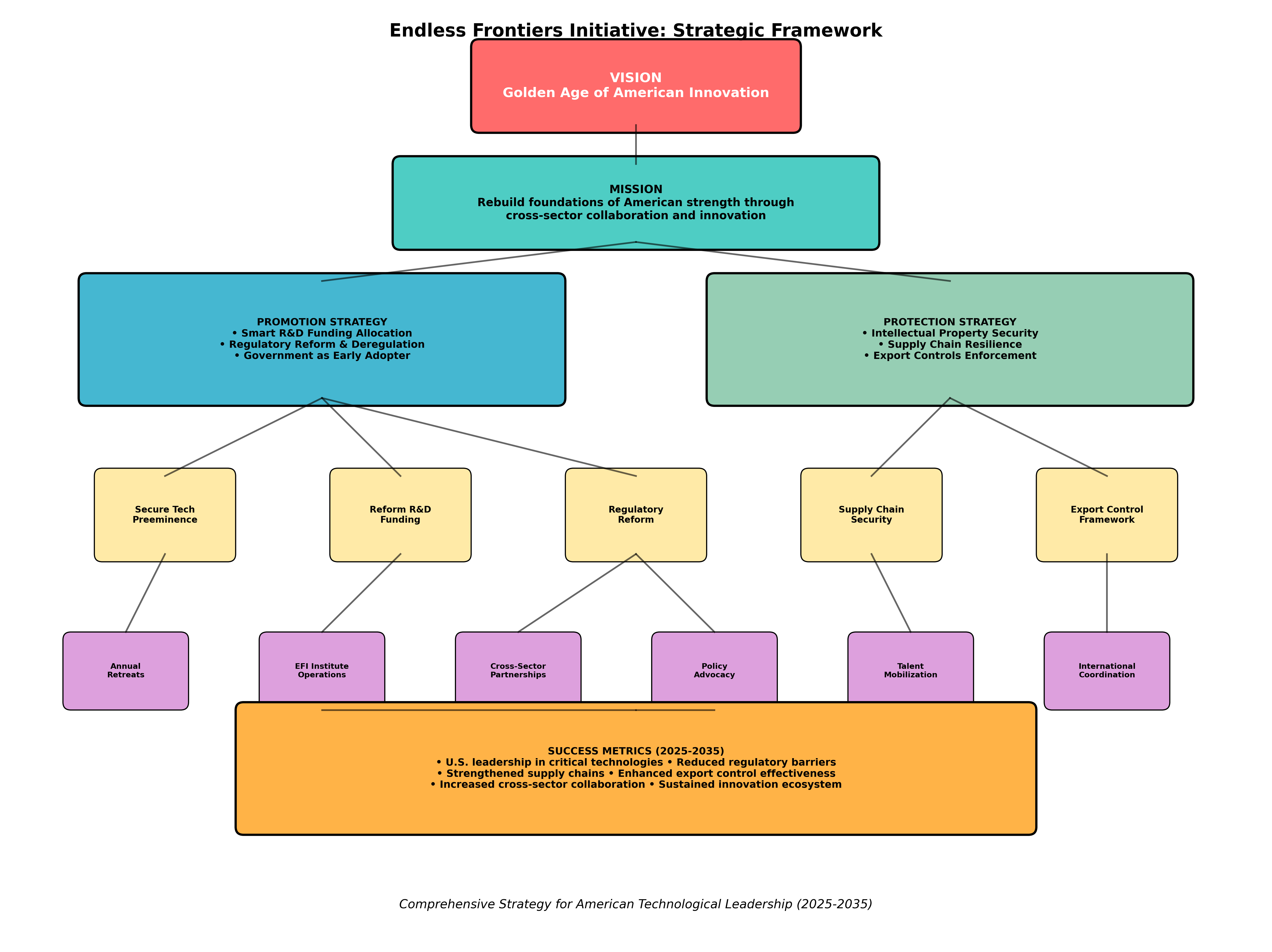
Figure A.5 — Geopolitical Context Analysis
Four-panel analysis covering technology competition areas (U.S. vs. China), initiative response priorities, stakeholder influence matrix, and projected impact timeline through 2035.
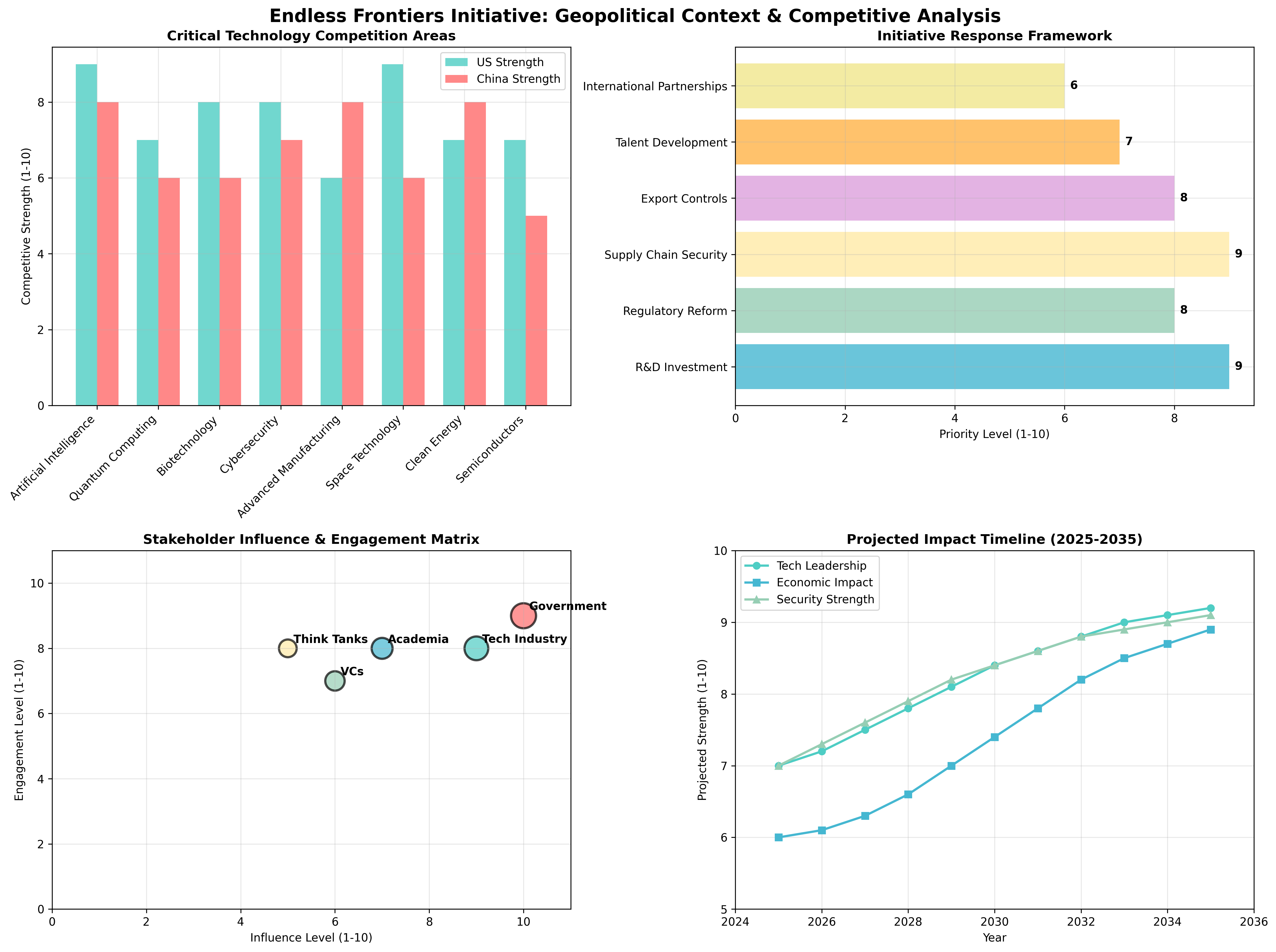
Figure A.6 — Strategic Implementation Timeline
Ten-year Gantt chart covering 2025–2035 implementation roadmap with 13 major milestones across Foundation, Implementation, Expansion, and Consolidation phases.
Interactive Visualizations
Interactive versions of the network diagram and strategic timeline are available as HTML files in the analysis package (network_diagram_leaders.html, strategic_timeline.html) and provide hover-over details, zooming, and filtering capabilities.